

PP Strapping vs BOPP Tape: When a Carton Needs More Than Tape Alone
· Packaging Tips
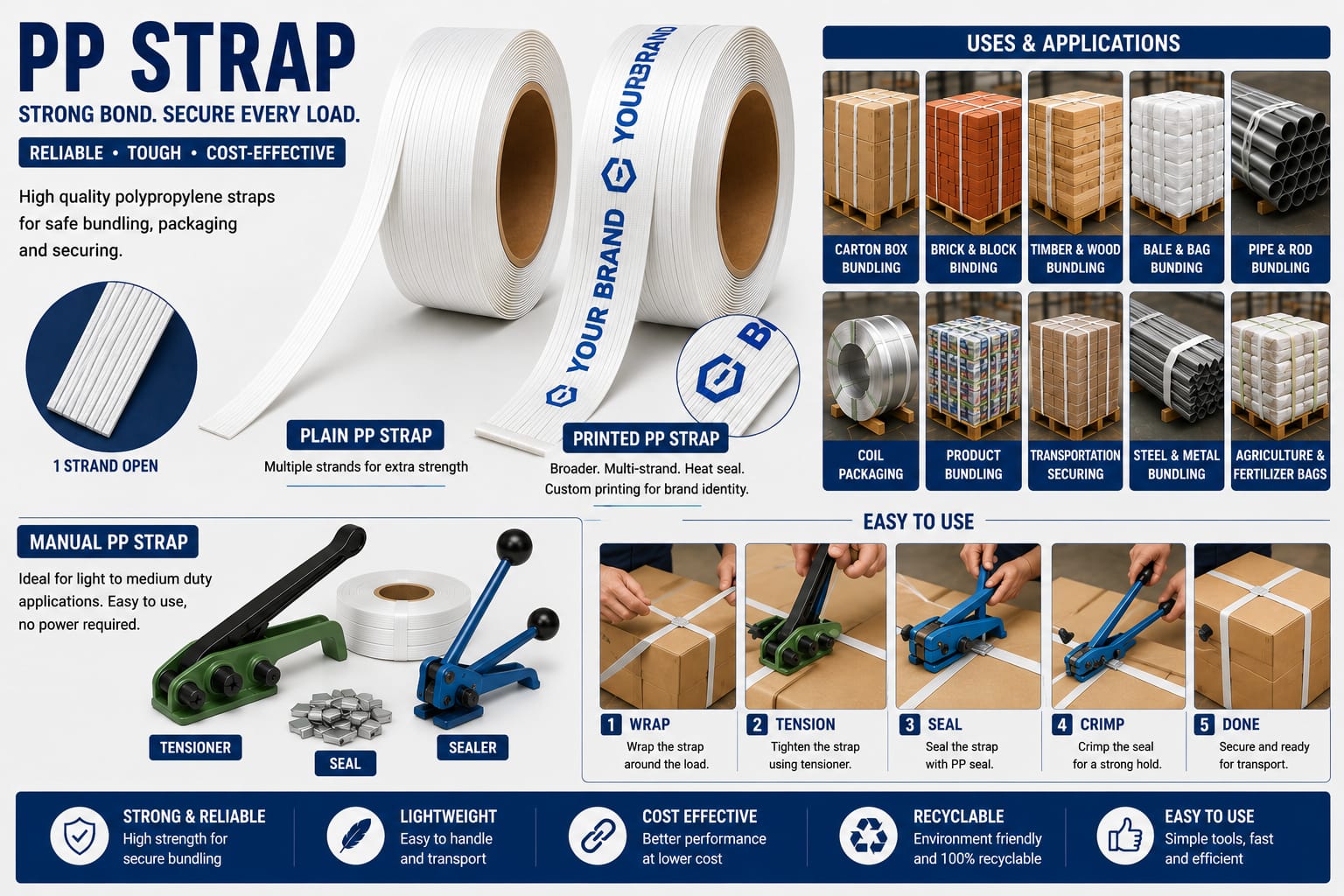
We get a version of this question every week: "Our cartons are still coming apart in transit even after we switched to a thicker tape." Nine times out of ten, the problem isn't the tape at all — it's that the load needed strapping, and tape was being asked to do a job it was never built for. Tape and PP strap solve different problems, and knowing where one stops and the other should start saves a lot of damaged shipments.
What Each One Is Actually Built For
BOPP tape's job is to seal — closing the flaps of a carton, holding a closed box shut against normal handling, and keeping dust and moisture out. It bonds to the surface with adhesive and works well up to a certain weight and stress level. PP strapping isn't an adhesive product at all — it's a high-tensile polypropylene band that's pulled tight and sealed under tension, distributing load-bearing force across the strap rather than relying on a sticky bond. It doesn't seal a box; it holds a load together under real mechanical stress — palletised cartons, bundled goods, and heavy or irregularly shaped items where tape alone would eventually give way.
Signs Your Shipment Needs Strapping, Not Just Tape
- Cartons are heavy or carry dense, shifting contents like metal parts, tiles or machinery components
- Goods are being palletised or bundled together, not just individually boxed
- The shipment will be handled multiple times — loaded, stacked, transported, unloaded — with real risk of compression or shifting
- You've noticed tape lifting at the seams under load, even after upgrading to a thicker or higher-tack tape
- The load needs to stay rigid during stacking in a warehouse or container, not just sealed shut
Choosing the Right PP Strap
PP strapping comes in different widths and tensile strengths depending on load weight — lighter grades for carton bundling, heavier grades for palletised or export loads. It's typically applied by hand tensioner or a strapping machine, and sealed either with a metal clip or heat-sealed depending on the setup. As with tape, the mistake we see most often is buyers defaulting to whatever width was used last time rather than matching the strap to the actual load weight and handling conditions — a strap that's under-specified for the load can stretch or snap under stress, while an over-specified one adds cost without adding benefit.
A Quick Way to Decide
If a box is light, individually handled, and mainly needs to stay closed and dust-free, tape alone is usually sufficient. Once you're palletising, bundling, or shipping anything heavy enough that a person would think twice before lifting it solo, it's worth adding strapping into the packing process rather than compensating with more tape. More tape on a load that needed strapping doesn't fix the underlying problem — it just delays where the failure shows up.
If you're not sure whether your current shipments need strapping added, or which strap width and tensile grade fits your load weight, send us your carton and pallet details and we'll recommend the right combination.
Phone: 98310 78503 | Website: www.skyline4r.com